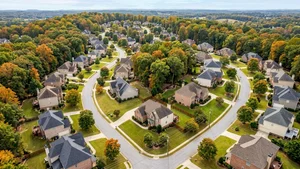
If you are currently scanning Zillow listings north of the perimeter, trying to decide where to plant your roots, you have almost certainly circled Forsyth County. Sitting just north of Alpharetta and Fulton County, and anchored by the city of Cumming, this area has transformed from a quiet rural outpost into one of Georgia's wealthiest and fastest-growing hubs.
People don't usually stumble into Forsyth by accident; they move here with a plan. By early 2026, the area has settled into a comfortable rhythm. The frantic, nonstop construction of the early 2020s has stabilized, and the local amenities have caught up with the population boom.
The thesis here is pretty simple: You move to Forsyth County for the school ratings and the safety, and you stay for the mix of suburban polish and rural charm. The trade-off? You are going to spend some time in your car. But for many households looking for space and top-tier education, that is a deal they are willing to make.
The Schools: The #1 Driver for Relocation
Let's be honest—if you are reading this, you probably already know about the school district. The Forsyth County Schools (FCS) system is the primary reason most people cross the county line.
FCS consistently ranks among the top 5 districts in Georgia. The academic data backs up the reputation. For example, the Class of 2025 posted the highest ACT composite score in the entire state. This isn't just about one or two good magnet programs; the high performance is consistent across the elementary, middle, and high school levels.
When you dig into the high schools, names like Lambert and South Forsyth often come up in conversation because of their size and history of high test scores. However, the district has innovated heavily in recent years. The Alliance Academy for Innovation, which focuses on career pathways like aerospace and healthcare, has recently ranked as highly as #2 among all Georgia high schools in Niche reports.
Beyond the rankings, the district is known for massive investment in STEM and career academies. The goal here is tangible readiness—whether that’s for Georgia Tech or a trade certification. With over 55,000 students as of 2026, it is a large system, but it manages to maintain high graduation rates and strong community involvement.
Safety and Community Feel
After schools, safety is usually the second box buyers want to check. When looking at the statistics, Forsyth County presents a very different picture than the Atlanta metro average.
According to recent data, violent crime here is exceptionally rare. Crime Grade and similar tracking agencies consistently rate the county as "A+" or safer than roughly 98% of U.S. counties. When incidents do occur, they are overwhelmingly property-related rather than violent.
The Forsyth County Sheriff’s Office is very active and maintains a high-visibility presence. This contributes to a vibe that feels distinct from the denser suburbs to the south. Even in the busier mixed-use areas, there is a sense of order. Residents often describe it as a place where the "suburban bubble" feels very real, offering a quiet, residential atmosphere that appeals to those moving to the Atlanta suburbs for a slower pace.
Top Family-Oriented Communities in Forsyth
Forsyth isn't just one big subdivision; it has three distinct "personalities" depending on where you look.
South Forsyth This area borders Suwanee and Johns Creek. It is the most developed, the most expensive, and the closest to Atlanta. If you want a shorter commute and don't mind density, this is where you look. The competition for homes here is generally the highest because you are practically in North Fulton, just with Forsyth taxes.
West Forsyth If you head toward the Cherokee County line, you hit areas like Vickery and Polo Fields. This area is famous for "Vickery Village," a walkable, mixed-use development that feels like a classic movie set. It offers a unique blend of luxury living with a small-village charm.
North Forsyth Drive north of Cumming, and the landscape opens up. This is where you find new construction, larger lots, and more land for your money. It used to be considered "too far out," but with the development of the Cumming City Center—a new downtown hub with amphitheaters, shops, and walkability—North Forsyth has become a destination in its own right.
Life Outside School: Parks, Nature, and Fun
One of the biggest misconceptions is that there is nothing to do here but drive to Target. That might have been true ten years ago, but the lifestyle scene has shifted dramatically.
Lake Lanier The county sits right on the western edge of Lake Lanier. In the summer, this is a massive draw for boating, fishing, and beach days. It anchors the local culture, and many residents spend their weekends on the water.
Green Space If you prefer land to water, the Sawnee Mountain Preserve offers hiking trails with arguably the best views in North Georgia outside of the Blue Ridge Mountains. For cyclists and runners, the Big Creek Greenway provides miles of connected paths that run all the way down into Alpharetta.
Social Hubs The game-changer for the area was the arrival of Halcyon. It’s a mixed-use precinct similar to Avalon in Alpharetta but with a more laid-back, Forsyth vibe. You have open container laws within the property, green spaces for kids to run, and high-end dining. Between Halcyon and the new Cumming City Center, you rarely need to leave the county for a night out.
Housing Market & Cost of Living (2026 Update)
If you looked at homes here in 2022, you might remember the bidding wars. Fortunately, the market in early 2026 is much more balanced. While good homes still move quickly, the average days on market is hovering around 60 days, giving buyers a little breathing room.
Price Expectations You should budget for a median home price between $560,000 and $600,000. You can find starter homes in the high $400Ks if you go further north, but for a standard 4-bedroom home in a sought-after school zone, the $550K+ range is the new normal.
The Tax Advantage One of the biggest financial draws here is the "Floating Homestead Exemption." If you are moving from a county where tax assessments skyrocket every year, this will sound like magic. Essentially, this exemption caps the taxable value of your home (for the county portion of taxes) at the price you paid. If your home value doubles over ten years, you are still taxed based on your entry value. This saves long-term residents thousands of dollars and makes the cost of living in Georgia much more manageable here.
The Commute Reality: The Main Drawback
We have to talk about the traffic. It is the single biggest downside to living here.
Forsyth County relies heavily on GA-400. It is the main artery, and it gets clogged. If you work in Downtown Atlanta or Midtown, you are looking at a 30 to 45-mile commute. On a clear Sunday morning, that’s 45 minutes. During rush hour, it is easily 60 to 90 minutes each way.
However, if your office is in the "Tech Corridor" of Alpharetta or near Avalon, your commute is a breeze—often just 15 to 20 minutes from South Forsyth. There is no MARTA train access here, so you will be car-dependent for almost everything.
Frequently Asked Questions
Is Forsyth County expensive to live in?
It is considered an affluent area, but it often offers better value than neighboring North Fulton. While home prices are in the $500K to $700K range, the property taxes are significantly lower due to the floating homestead exemption and lower millage rates.
How far is Forsyth County from Atlanta Hartsfield Airport?
This is a long haul. You are roughly 50 to 55 miles north of the airport. Without traffic, it takes about an hour, but you should always budget at least 2 hours to be safe, especially during peak travel times.
What is the best high school in Forsyth County?
"Best" is subjective, but looking at data, Lambert High School, South Forsyth High School, and the Alliance Academy for Innovation consistently top the state rankings for test scores and college readiness.
Does Forsyth County have a homestead exemption?
Yes, and it is one of the best in the state. The Floating Homestead Exemption freezes the assessed value of your home for county maintenance and operation taxes, preventing your tax bill from spiking just because the market value went up.