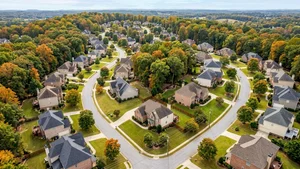
If you're buying a home in Alpharetta, GA, the first number you'll need to sit with is $785,000 - that's roughly where the median home price lands, and it reflects how consistently this corner of northern Fulton County holds its value. Right now there are about 331 active listings and 4.4 months of supply, which gives buyers more breathing room than they'd have had a few years ago. Still, homes are moving in a median of 24 days, so don't mistake "some options" for "no competition."
Whether this city makes sense for you comes down to three things: what you can spend on housing, how much of your life you're willing to give to a commute, and whether the local amenities actually match your day-to-day needs. What follows is a straightforward look at the data - no cheerleading.
The Quick Verdict on Living in Alpharetta
The honest answer to "is this a good place to live?" is that it depends almost entirely on your budget and how often you need to be in downtown Atlanta.
The data shows a city with real strengths - over 750 acres of parks and trails, solid local infrastructure, and a median household income around $153,928 according to recent Census-based reports. The trade-off is a cost of living that runs well above both state and national averages. If you're relocating from a lower-cost market, that gap will feel significant. If you're coming from another high-cost suburb, less so.
Pros of Moving to Alpharetta
The park and trail network alone - over 750 acres - is something a lot of suburbs promise and don't deliver at this scale. The local economy is strong, and that median household income of around $153,928 reflects a workforce that's pulling real weight in the broader metro.
Cons
Housing cost is the obvious one. The commute down State Route 400 into Atlanta is the other. During peak rush hour, that drive can take a meaningful chunk out of your morning and evening. That's not a theoretical concern - it's a daily reality for anyone working in the city core.
Weighing Cost, Commute, and Climate
Budget for a median price near $785,000 and treat that as your floor, not a ceiling. On the commute, don't take anyone's word for it - drive the actual route at your actual start time before you sign anything.
Where Alpharetta Is Located and Its Size
Alpharetta sits in Fulton County, just north of Atlanta. That location puts it squarely in the conversation for buyers who want suburban housing without completely disconnecting from the metro's job market.
It's part of the larger Atlanta metropolitan region, and when buyers are shopping this far north, they're usually cross-shopping Roswell and Johns Creek at the same time. All three are worth comparing directly rather than settling on one based on reputation alone.
Fulton County and Atlanta Access
The main artery is State Route 400, which connects north Fulton County directly to Atlanta's major interstates. You're far enough out to feel the distance from the densest urban areas, close enough that major employment hubs aren't unreachable - it's the calibration between those two things that buyers need to test for themselves.
Population Breakdown
Recent estimates put the population somewhere between 65,799 and 67,700 residents. That range exists because Census counts fluctuate between reporting cycles, but either way it puts the city in mid-sized suburban territory - dense enough to support real retail and dining infrastructure, not so dense that everything feels crowded.
What the Crime Statistics Show
Published crime data for this area varies more than you'd expect depending on which source you're reading, and that gap matters when you're making a housing decision.
Pull from primary sources when you can. Third-party aggregators use different methodologies, different base years, and different geographic boundaries, which is why their numbers sometimes tell contradictory stories about the same place.
Understanding the Published Rates
According to NeighborhoodScout, which uses 2024 FBI data, the crime rate is 14 crimes per 1,000 residents - higher than the national average across all communities. On the other side of that, sources like AreaVibes and HomeSnacks report the overall crime rate is roughly 33% to 34% below the national average, with a violent crime rate of 218 to 249 per 100,000 residents. Both sets of numbers are real; they just measure differently. That's exactly why you shouldn't let any single aggregator make this call for you.
How to Research Specific Areas
The Alpharetta Police Department and the Fulton County Sheriff's office can give you raw, address-level data. The FBI's Uniform Crime Reporting program is another primary source. Use those, apply your own standards, and draw your own conclusions.
Cost of Living and Housing Prices
The headline number is $785,000 - that's the median sale price based on recent market data, with homes moving in about 24 days. Renters aren't getting a break either: average apartment rents run from $2,047 to $2,700 depending on the source you're reading.
Get these figures into your budget model before you fall in love with a specific neighborhood or property type.
Current Home Prices and Rent
The national median home value sits at $359,870 for context. U.S. News reports an estimated value of $614,096 here based on Census data, while live MLS data shows recent sales closer to $785,000. The gap between those two figures reflects the difference between older Census-weighted estimates and what's actually clearing in the current market. Plan for the higher number.
Salary Needed to Live Here
Cost of living indices put the area between 7% and 42% above the U.S. average - that wide range comes from different aggregators weighting different expense categories. TrueCostLiving estimates a single professional needs a gross salary of at least $71,349 to live comfortably in 2026. The MIT Living Wage Calculator sets the bare minimum for a family of four in Fulton County at $69,158 per year. Those two figures measure very different things, and "comfortable" and "bare minimum" are not interchangeable.
Local Lifestyle, Parks, and Amenities
The park system is genuinely substantial - over 750 acres of parks and trails within the city limits, funded through local taxes and well-maintained. That's not marketing language; it's a measurable footprint of green space that gives residents real options for walking, biking, and outdoor recreation without leaving the city.
Beyond the parks, the city supports a strong network of retail, dining, and commercial centers. The infrastructure is there.
Access to Parks and Trails
Over 750 acres. For a suburb this size, that's a lot of usable outdoor space, and it's distributed across the city rather than concentrated in one corner.
Healthcare and Civic Services
Regional medical facilities and civic services are accessible throughout Fulton County. Day-to-day needs - routine healthcare, local government services - are well supported by the city's existing infrastructure.
Comparing Alpharetta to Atlanta and Nearby Options
The core trade-off is simple: you get more space out here and give up commute time to get it. Suburban homes typically offer more square footage and larger lots than what you'd find in the city proper. Whether that exchange works for you depends entirely on your job location and your tolerance for time in the car.
This isn't a judgment call I can make for you - it's arithmetic. Run the numbers on your specific commute, your specific housing needs, and your specific budget.
Tradeoffs with Commute and Cost
Route 400 during morning and evening rush hours is the variable you can't ignore. The upside is that single-family home inventory here is more plentiful than what you'll find in the condo-dense downtown Atlanta market.
Housing Type Differences
The housing stock is mostly detached single-family homes and townhouse communities. Atlanta proper offers a denser mix - high-rise condos, historic bungalows, multi-family units. They're genuinely different products, and which one fits your life is a lifestyle question as much as a financial one.
Senior, Assisted, and Sober Living Options
If you're looking at Alpharetta for a family member who needs specialized housing - or for yourself - there are options here across different care levels. Buyers in this situation should research specific facilities directly to understand pricing and admission requirements, since those details vary considerably from one property to the next.
Senior and Assisted Living Facilities
Fulton County has multiple senior and assisted living facilities serving older adults who need daily support. The range goes from basic residential assistance to more comprehensive medical monitoring - different tiers for different levels of need.
Sober Living Housing
There are sober living homes within the city limits for individuals in recovery. These are structured, substance-free residential environments designed to help residents move toward independent living.
Frequently Asked Questions
Is the cost of living in Alpharetta, GA significantly higher than other Atlanta suburbs?
Yes. Housing costs exceed both state and national averages, with a median sale price around $785,000. Depending on which index you use, the overall cost of living runs between 7% and 42% above the U.S. baseline.
What are the biggest downsides or hidden negatives to living in Alpharetta?
Elevated housing costs and traffic congestion on the commute into Atlanta are the two consistent ones. Higher property values also mean higher monthly tax obligations - factor that into your carrying cost calculation before you're under contract.
How bad is the daily commute from Alpharetta to downtown Atlanta?
State Route 400 during peak morning and evening hours can eat up real time. The only way to know whether it works for your schedule is to drive the route at your actual travel times - not on a Saturday afternoon.
What are the main differences between buying a home in Alpharetta versus neighboring Roswell?
Both are in northern Fulton County, but they differ in housing inventory and local amenities. Compare property taxes, park access, and proximity to major highways in each town side by side - don't assume they're interchangeable just because they're close.
Are the public schools in Alpharetta, GA really as good as the ratings suggest?
The area is served by the Fulton County Schools district, which operates numerous campuses across the region. Review the district's official boundary maps and state performance data to evaluate the specific schools that would serve a property you're considering.
Is Alpharetta a good fit for young professionals, or is it mostly a family-oriented suburb?
The city has over 750 acres of parks and trails, commercial centers, and amenities that serve a range of lifestyles. Your decision should come down to budget, commute tolerance, and housing preferences - not demographic labels.