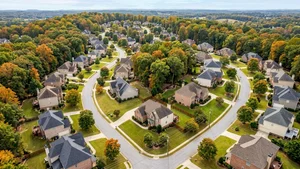
As of mid-2026, the median sale price for a home in Forsyth County, GA is around $612,000. Homes are averaging 41 days on the market, and inventory is holding steady at over 1,500 available listings - so first-time home buyers in Forsyth County, GA have real time to think, compare, and plan.
Most buyers zero in on the down payment and treat everything else as a footnote. That's a mistake. Closing costs - the legal, administrative, and lending fees required to actually finalize the transaction - can add up fast, and if you don't account for them early, you'll be scrambling for cash right when you can least afford it.
What Are Closing Costs in Georgia?
Closing costs are the collection of fees, taxes, and prepayments required to transfer property ownership and secure a mortgage. Georgia handles these transactions through a closing attorney, not a title or escrow company. That attorney coordinates between you, your lender, and the seller to make sure all the money moves correctly.
Both parties owe something at the closing table. Exactly what you owe depends on your loan type, the local municipality, and what you negotiated in the purchase contract.
Closing costs versus your down payment
Your down payment goes directly into your equity - it reduces what you borrow. Closing costs are separate, paid to third parties for services rendered during the transaction. Your lender will roll both figures into a single "cash to close" number, which is what you'll wire to the closing attorney.
Within three days of your mortgage application, your lender is required to send you a Loan Estimate that breaks out both the down payment and the estimated closing costs. Read it carefully. That document tells you exactly where your money is going before you're locked in.
Buyer costs versus seller costs
Sellers generally pay more at closing than buyers, mostly because they're covering the real estate agent commissions. Strip those out, and average seller-side closing costs run about 3.21% of the sale price. Sellers also customarily pay the state transfer tax and the owner's title insurance policy.
You, as the buyer, take on the financing-related expenses - appraisal costs, origination fees, the lender's title insurance policy - plus you fund your own escrow account for future property taxes and homeowners insurance.
How Much Are Buyer Closing Costs in Forsyth County?
In Georgia, buyers typically pay somewhere between 2% and 5% of the purchase price in closing costs. Data combining Rocket Mortgage and Redfin figures puts the average buyer closing cost percentage in Georgia at roughly 4.3% of the sale price.
On a median-priced Forsyth County home at $612,000, that 4.3% works out to roughly $26,300. The actual number shifts based on your loan program, which lender you use, and the time of year you close.
Average closing costs as a percentage of the price
The 2% to 5% range is a standard benchmark. Cash buyers usually land at the lower end since they skip lender fees entirely. If you're using an FHA or VA loan, expect higher upfront percentages - mandatory government funding fees or mortgage insurance premiums push those numbers up.
Property taxes and homeowners insurance make up a significant chunk of closing costs, and both are tied to the home's assessed value. Your loan disclosures will show you exactly how your percentage breaks down.
Why costs vary across the Atlanta metro area
Forsyth County property taxes directly affect your cash to close because lenders require you to prepay several months of taxes upfront. Tax rates differ between Forsyth County and neighboring areas like Fulton or Gwinnett counties, which shifts the total escrow requirement.
Homeowners insurance premiums add another layer of variability. A large single-family home in Cumming carries different insurance costs than a townhome closer to Alpharetta - and that difference shows up in the amount you need to fund the escrow account at closing.
Buyer Closing Costs on Different Home Prices in Georgia
Applying the state average of 4.3% gives you a useful baseline across different price points. The percentage scales predictably with purchase price, even if individual lender fees vary.
One thing worth keeping in mind: that 4.3% average includes prepaid taxes and insurance, which are technically your own future bills paid in advance. The actual administrative and legal fees make up a smaller slice of the total.
Sample cost breakdown by home price
On a $300,000 property, expect average closing costs around $12,900. A $400,000 home pushes that estimate to about $17,200.
Moving up into the Forsyth County median range: a $500,000 purchase yields roughly $21,500, and a $600,000 home typically requires around $25,800.
How to calculate your total cash to close
Add your planned down payment to your estimated closing costs. A buyer putting 10% down on a $600,000 home needs $60,000 for the down payment plus approximately $25,800 for closing costs. Then subtract any earnest money you already paid when you signed the contract. What's left is the amount you'll wire to the closing attorney before your settlement date.
Breakdown of What Buyers Pay at Closing
Closing costs aren't one arbitrary fee. They're a line-by-line itemization of services provided by the lender, the attorney, the appraiser, and the local government. The Closing Disclosure - provided three days before settlement - lists every charge in detail.
Here's what you're actually funding.
Loan and lender fees
Lenders charge origination fees to process and underwrite your mortgage. You'll also pay for a third-party appraisal to confirm the property's value supports the loan amount. Credit report fees and flood certification charges fall into this category too.
Discount points are optional - you can pay them upfront to buy down your interest rate over the life of the loan. Whether that makes sense depends on how long you plan to stay in the home.
Title insurance policies
Title insurance protects against past defects in the property's ownership history. In Georgia, you as the buyer customarily pay for the lender's title insurance policy, which your lender requires to approve the mortgage.
The owner's title insurance policy - the one that protects your equity - is customarily paid by the seller in Georgia. That said, it's negotiable in the purchase contract, so don't assume anything until you see it in writing.
Escrow fees and attorney charges
Georgia is an attorney-closing state. A licensed real estate attorney conducts the settlement, performs the title search, drafts the legal documents, and disburses the funds. That attorney charges a settlement fee for those services.
Buyers and sellers often split the attorney's settlement fee, though the exact split depends on the purchase agreement. In a financed transaction, the attorney represents the lender - their job is to make sure all loan requirements are satisfied.
Transfer and recording taxes
Georgia applies a uniform real estate transfer tax across the state, including Forsyth County. The rate is $1.00 for the first $1,000 of the sale price, plus $0.10 for each additional $100 - which works out to roughly 0.1% of the sale price. On a $600,000 sale, that's roughly $600, and it's customarily paid by the seller.
Buyers do pay the state intangible recording tax, calculated at $1.50 per $500 of the loan amount, along with minor county recording fees.
Prepaids and escrow reserves
Your lender requires you to establish an escrow account to cover future property taxes and homeowners insurance. At closing, you'll typically pay a full year of homeowners insurance upfront, plus a few months of reserves. Property taxes for the current year get prorated based on your closing date.
Daily mortgage interest from the closing date through the end of the month is also collected as a prepaid item. It sounds minor, but close late in the month and it barely registers; close early and it adds up.
Who Pays Closing Costs in Georgia: Buyer or Seller?
Georgia follows established local customs for splitting closing costs, but nearly everything is negotiable in the purchase contract. Both parties receive their own settlement statements laying out exactly what they owe.
Sellers carry the weight of agent commissions. You, as the buyer, handle the bulk of the financing-related expenses. Knowing these customary splits helps you structure your initial offer more intelligently.
Costs the buyer customarily pays
You're responsible for everything tied to your mortgage - appraisal, origination fees, credit reports, and the intangible recording tax on the loan. You also fund your own property tax and insurance escrow accounts, pay for the lender's title insurance policy, and cover any optional home inspections before closing.
Costs the seller customarily pays
The seller pays agent commissions for both the listing agent and the buyer's agent - that's their biggest expense by far. They also customarily cover the state transfer tax based on the sale price, the owner's title insurance policy to protect you, and any prorated property taxes for the portion of the year they owned the home. Any fees to pay off their existing mortgage come out of their proceeds as well.
Asking the seller to cover your costs
You can ask the seller to pay a portion of your closing costs through seller concessions - a specific dollar amount or percentage written into the purchase offer that the seller credits back to you at closing. Sellers are more open to this when a home has been sitting. With Forsyth County homes currently averaging 41 days on the market, that conversation is worth having.
Loan programs do cap what sellers can contribute. Conventional loans typically limit seller concessions to 3% to 6% of the purchase price, depending on your down payment.
Estimating Your Closing Costs
Getting a real number early - not a guess - lets you set a budget that actually holds. If you're only tracking your down payment and ignoring closing costs, you're working with an incomplete picture.
The most accurate figures will always come from an official Loan Estimate once a specific property is identified. Until then, online tools and lender conversations give you a working range.
Using a buyer closing cost calculator
A closing cost calculator estimates your expenses by factoring in the home price, down payment, and local tax rates. Plugging in a Forsyth County zip code helps generate a more tailored projection based on local averages.
Treat the output as a starting point. Calculators can't predict the exact fees a specific lender will charge, so don't build your entire budget around one.
Estimating costs when paying cash
Cash buyers skip origination fees, appraisal charges, mortgage recording taxes, and lender's title insurance - which meaningfully reduces total closing costs compared to financed buyers. You'd still owe the attorney settlement fees, your share of prorated property taxes, and any optional inspections. Cash closing costs often land closer to 1% or 2% of the purchase price.
How to Reduce Your Closing Costs in Forsyth County
You have real options here. Taking the time to evaluate loan programs and negotiate contract terms can save you thousands at the closing table - money that stays in your pocket for moving expenses, furniture, or whatever the house needs on day one.
Talk through these strategies with your agent before you submit an offer.
Seller concessions and credits
Seller concessions are the most direct path to lowering your cash to close. If a home needs minor repairs, request a closing cost credit rather than asking the seller to fix the issue before settlement. You get more control over how the work gets done, and the cash stays in the deal.
Just know that loan programs cap how much a seller can contribute. Conventional loans typically limit seller concessions to 3% to 6% of the purchase price, depending on your down payment amount.
Lender credits and shopping for fees
Lender credits let the lender cover some or all of your closing costs in exchange for a slightly higher mortgage interest rate. Less cash upfront, higher monthly payment over time - whether that trade-off makes sense depends on your situation.
Shopping multiple lenders is worth the effort. Third-party fees like appraisals and taxes don't change, but lenders charge different origination and underwriting fees. Comparing Loan Estimates side by side can surface real savings.
Negotiating your final numbers
When your Closing Disclosure arrives, compare it line by line against your original Loan Estimate. If lender-controlled fees jumped significantly without a valid reason, ask the lender to explain and correct it. You have that right.
Also shop your homeowners insurance independently rather than taking the first quote you're handed. A lower annual premium directly reduces what you need to fund the initial escrow account at closing.
Frequently Asked Questions
What is the average percentage buyers pay for closing costs on a home in Forsyth County, GA?
In Georgia, buyers typically pay about 2% to 5% of the home's purchase price in closing costs. Data analysis places the average at approximately 4.3% for buyers. On a median-priced $612,000 home in Forsyth County, that translates to roughly $26,300.
Are there any specific local taxes or impact fees included in a Forsyth County buyer's closing costs?
Yes - buyers pay the Georgia intangible recording tax, which is $1.50 per $500 of the loan amount, along with standard county recording fees. Georgia also applies a uniform real estate transfer tax of roughly 0.1% across Forsyth County, though the seller customarily pays that fee.
Is it common for sellers in the current Forsyth County market to cover a buyer's closing costs?
It depends on the property and the negotiation. With Forsyth County homes currently averaging 41 days on the market and inventory over 1,500, buyers have leverage to ask for seller concessions - particularly on homes that have been listed for several weeks.
What happens if my final cash-to-close amount is higher than my initial Loan Estimate right before closing?
It depends on which fees increased. Compare the final Closing Disclosure against your initial Loan Estimate to identify exactly what changed. If lender-controlled fees increased beyond legal tolerance limits without a valid change in circumstance, the lender is required to correct the discrepancy.