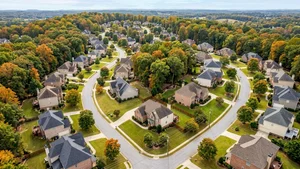
If you are thinking about moving to Forsyth County, you probably have a lot of questions about the lifestyle, the homes, and—inevitably—the traffic. Let’s be real for a moment: Forsyth County is a suburban haven where having a car is pretty much essential for daily life. We love our green spaces and larger lots, but that usually means we aren't walking to the grocery store.
However, the trade-off is often worth it. The golden rule of real estate here is that proximity to GA 400 often dictates both your home price and your commute ease. While we are definitely car-dependent, we are also strategically connected. You are close enough to the massive job hubs in North Metro Atlanta without always paying Fulton County prices. Plus, with the rise of "live, work, play" centers like Halcyon and the proximity to Avalon, many residents find they don't need to leave the county nearly as often as they used to.
Driving in Forsyth: The Major Arteries You Need to Know
To understand getting around here, you first have to understand the layout. Our road network is built around one massive spine, with several key arteries feeding into it.
GA 400 (The Hospitality Highway) This is the central lifeline connecting Forsyth to Atlanta. If you are living in Cumming or South Forsyth, your life likely revolves around "The 400." You will get to know the exits by heart. Exit 13 (Peachtree Pkwy) is a major retail and business hub. Exit 14 (Hwy 20) is the gateway to downtown Cumming and government buildings. Further north at Exit 15 (Bald Ridge Marina), things start to feel a bit more open and close to the lake.
Highway 20 (Canton Hwy/Buford Hwy) Think of this as the belt that holds the county together from east to west. It connects Canton in Cherokee County over to Buford in Gwinnett County, running right through the heart of downtown Cumming. It’s busy, but it’s the most direct way to get across town without dipping south.
Highway 9 (Atlanta Hwy) This road runs parallel to GA 400. Locals often use it as a "bailout" route when the highway is backed up. It has its own traffic, especially during school zones, but sometimes a moving car on Hwy 9 feels better than a parked car on the highway.
Highway 141 (Peachtree Pkwy) For those looking at homes in South Forsyth neighborhoods, this road is critical. It is the main path for residents commuting to jobs in Johns Creek, Norcross, or Peachtree Corners.
McFarland Parkway (Exit 12) This area has transformed completely in the last decade. It serves as the gateway to the Halcyon development and offers easy access to the southern trailhead of the Big Creek Greenway.
A quick note on flow: like most metro suburbs, the heavy traffic generally flows South in the mornings (6:30 - 9:00 AM) and North in the evenings (4:00 - 6:30 PM). Also, keeps in mind that throughout 2026, we are still navigating active work zones for the express lanes project, so keep your eyes peeled for lane shifts.
Typical Commute Times to Key Hubs
When clients ask me "How is the traffic?", I usually have to ask "To where?" and "At what time?" The difference between a Tuesday at 8:00 AM and a Saturday at 10:00 AM is night and day.
Here is a realistic look at drive times from central Forsyth (Cumming area) to the major destinations you might need to reach.
Alpharetta / Avalon This is a short hop for most. If you are in South Forsyth, it’s practically next door. From central Cumming, expect a 20-minute drive off-peak, but plan for 35 to 45 minutes during rush hour.
Perimeter Center (Dunwoody/Sandy Springs) This is a very common commute for corporate professionals living in Cumming. Without traffic, you might make it in 30 minutes. During the morning rush, you should budget closer to 50 to 60 minutes.
Midtown / Downtown Atlanta This is the long-haul commute. If you are heading into the city for a game or a show on the weekend, it’s an easy 45 to 50-minute drive. However, if you are commuting daily for work, it’s a grind. Peak travel times can range from 75 to 90+ minutes depending on accidents or weather.
Hartsfield-Jackson Airport If you travel frequently for work, this is essential planning info. The airport is on the south side of Atlanta, meaning you have to cross the entire city. Allow 1.5 to 2 hours during peak times to be safe. Off-peak, it’s usually a smooth hour and 10 minutes.
Public Transportation: The Xpress Bus & MARTA Connection
A common misconception is that because we don't have trains, we don't have transit. That’s not entirely true, especially for the 9-to-5 crowd commuting to Atlanta.
Xpress GA Service The Xpress bus system is the primary option for professionals who want to reclaim their commute time to answer emails or read. The main hub here is the Cumming Park-and-Ride at Exit 14, which offers free parking.
Important Route Update In the past, there was a direct bus from Cumming straight to Downtown Atlanta. That structure has shifted. Riders now primarily use Route 401. This bus takes you from the Cumming Park-and-Ride to the Medical Center and Dunwoody MARTA stations.
The Transfer Once you arrive at the Medical Center or Dunwoody station, you transfer to the MARTA Red Line train to continue south into Buckhead, Midtown, or Downtown. It adds a step, but it keeps the bus from getting stuck in downtown gridlock.
No Local Rail Just to be super clear for anyone relocating from cities like New York or Chicago: MARTA trains do not extend into Forsyth County. The train line stops in Sandy Springs/Dunwoody, which is south of us.
Getting Around Locally: Access Forsyth & Rideshare
If you don't drive, or if you have a family member who needs a lift, you aren\'t totally out of luck. There is a lesser-known service that works wonders for getting around locally.
Access Forsyth (formerly Dial-A-Ride) Many people assume this is just for seniors, but Access Forsyth is actually a reservation-based curb-to-curb service available to all county residents. It’s perfect for getting to appointments or local errands.
Here is how it works: You must schedule your ride in advance—you can't just hail it like a taxi. It is very affordable, typically a flat fee around $3 per trip, though it operates mostly during weekday business hours.
Rideshare Availability If you need something on-demand, Uber and Lyft are widely available, especially in South Forsyth and around Cumming. If you are looking at homes in North Forsyth (past Exit 15 or 16), availability might be a bit spotty, and wait times will be longer. There are also local non-profits and "Common Courtesy" programs that help subsidize rideshare costs for elderly residents, which is great for peace of mind.
Walkability & Biking: The Big Creek Greenway
We might be a driving county, but we take our recreation seriously. If you want a walkable lifestyle in Forsyth, you usually head to the Greenway.
The Big Creek Greenway is Forsyth’s crown jewel for pedestrians and cyclists. It spans over 16 miles within the county, winding through wetlands and forests. It’s a fantastic amenity for runners, bikers, and anyone wanting fresh air.
You can hop on at several key access points, including the popular Halcyon trailhead near Exit 12, Fowler Park, or Bethelview Road. One of the coolest features is that it connects south to Alpharetta’s Big Creek Greenway. Technically, you could ride your bike from Cumming all the way down to Alpharetta on a protected path.
For those who want to "park once and walk everywhere," you should look at communities near Halcyon or The Collection at Forsyth. These mixed-use developments offer that urban feel where you can grab dinner, do some shopping, and catch a movie without getting back in the car.
Looking Ahead: Future Transportation Projects
Finally, if you are buying here, you are investing in the future infrastructure. The biggest topic of conversation in 2026 continues to be the GA 400 Express Lanes project.
The goal of this massive undertaking is to provide reliable travel times using variable toll lanes—similar to what you might see on I-85 or I-75. While the construction phases can be a headache with lane shifts and slow-downs, the long-term value for property owners and commuters is huge. It promises a predictable option for days when you absolutely cannot be late.
Frequently Asked Questions
Is there public transportation in Forsyth County?
Yes, but it is limited compared to a major city. The primary public transit is the Xpress GA commuter bus service (Route 401) which connects commuters to the MARTA rail system in Dunwoody. For local travel within the county, there is a reservation-based service called Access Forsyth.
Does MARTA go to Cumming, GA?
No, MARTA trains do not come up to Cumming. The MARTA rail line ends at the North Springs station in Sandy Springs/Dunwoody. However, you can drive or take the Xpress bus from Cumming to connect to the train stations.
How long is the commute from Forsyth County to Atlanta?
It varies heavily by time of day. Without traffic, you can reach Downtown Atlanta in about 45–50 minutes. During peak rush hour, you should plan for anywhere from 75 to 90 minutes.
What is the cost of the Xpress bus from Cumming?
Fares for the Xpress bus are quite reasonable, typically falling in the $3–4 range for a one-way trip depending on the current zone pricing. Most daily commuters use a pass system (Breeze Card) which can lower the per-ride cost.
Is Forsyth County walkable?
Overall, Forsyth County is not considered walkable for daily errands; most neighborhoods require a car. However, specific areas like the Big Creek Greenway offer miles of recreational walking and biking, and mixed-use developments like Halcyon offer a "park and walk" environment for dining and entertainment.