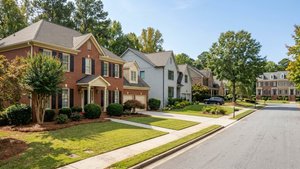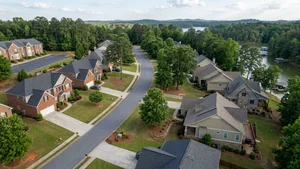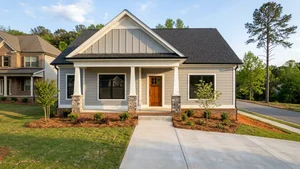
Buying a vacant lot and building a custom house is one way to get exactly the floor plan and water access you want. On a reservoir managed by the federal government, that process involves specific land-use rules and permits that don't apply to standard inland construction. You have to account for government property lines, flowage easements, and shoreline management policies before you break ground.
The physical acreage of a waterfront property rarely matches its buildable area, and the costs to prepare the site can quickly exceed the price of the land itself. These requirements determine whether a specific parcel can support the house you have in mind, and comparing those upfront expenses against the current resale market tells you when taking on a construction project makes financial sense.
Key takeaway
Build your own home on Lake Lanier when you need a lot, layout, or shoreline the resale market can't provide. A builder's per-square-foot quote usually leaves out the lot, septic, and dock permit, so your all-in number can easily exceed the resale median. If it does, a resale house is the better buy, and with houses taking months to sell, buyers have room to negotiate.
Who this guide is for
You're deciding whether to buy a lot near Lake Lanier and build, or buy an existing home, and you need to know what the lake adds to the cost and paperwork before you sign a contract.
Is it cheaper to build or buy on Lake Lanier?
On Lake Lanier, a self-build has to beat a resale market where single-family homes sell for a median $188 per square foot with the land included, sit a median 92 days, and close at 97.9% of list price. Building only pays off when the lot, site work, septic, permits, and construction together come in under that benchmark, or when you need a shoreline the resale stock lacks.
Take a 2,500-square-foot house as your working example. At that median, an existing home costs approximately $470,000. For a custom build, you stack multiple expenses to find your true total: the lot price (which requires checking current land listings and ordering a survey), site work, utility connections, and county permits, and then the physical construction itself. Nationally, the average construction cost for a single-family home was roughly $162 per square foot in late 2024, a figure that excludes the land and lake-specific site preparations.
With single-family homes sitting for a median 92 days and 5.4 months of supply available, you have the time and room to negotiate on a resale house while you price out a build. That said, single-family prices are up 7.4% year over year. A construction project that takes a year or more means you're pricing your build against a moving target.
Building a custom home wins on fit rather than price. You control the lot, floor plan, and water access. Unless your all-in calculation lands well under the resale benchmark, expect to pay a premium for that control.
Questions to answer before you buy a lot
Does the lot's buildable area, septic field, and house all sit above the 1085 contour? The federal government holds a flowage easement up to this elevation. If you don't know where this line crosses the property, start by reviewing the contour rules and septic requirements.
Is a dock the reason you want this lot, and is the shoreline in front of it eligible for a federal permit? A waterfront premium only makes sense if you can access the water. Check the dock permit rules before you assume a lot can support one.
Does the lot price plus site work, construction, and permits, divided by the square footage you want, come in under the single-family resale benchmark? Run the worked example above with real quotes to see how your budget compares to existing homes.
Do you want a fixed price and a known move-in date more than a custom lot? A master-planned community removes the variable costs of raw land. Compare new construction communities against building on your own lot before buying land. The North Georgia Group can pull recent resale comps for the size of house you're planning so you can evaluate the numbers.
What a Lake Lanier lot adds to the cost of building
A per-square-foot quote from a residential builder typically covers the structure itself. It rarely accounts for the land, the cost to clear it, or the utilities required to make it habitable. On Lake Lanier, the site preparation phase carries heavy variables that can alter your total budget.
The federal government's management of the reservoir dictates what you can build and where you can place it. These regulations add layers of surveying, permitting, and engineering that inland lots don't require. The four factors below outline the trade-off between the custom waterfront property you want and the final all-in number.
The 1085 contour and the Corps property line
The most surprising detail for new waterfront buyers is that the U.S. Army Corps of Engineers owns the land immediately surrounding the reservoir. Lake Lanier's full pool elevation is 1,071 feet above mean sea level in the summer and 1,070 feet in the winter. The land above this controlled pool elevation, approximately 19,000 acres, is government-owned shore land managed for public recreational access. Your private deed stops at the government property line, meaning you don't own the shoreline.
Beyond the property line, the government also holds a flowage easement on private land up to the 1,085-foot contour. This real property interest gives the Corps the right to occasionally or perpetually flood the land up to 1,085 feet above mean sea level. The easement restricts private owners from constructing habitable structures below that elevation and prohibits altering the existing contour.
On steep lots, this restriction pushes the buildable footprint far uphill, often requiring extensive grading, tall foundation walls, and expensive retaining structures to create a flat pad. A lot's total acreage can severely overstate what you can build on. Get a survey that marks both the government line and the 1085 contour before you start comparing lot prices per acre.
Septic, well, or county sewer
Many properties around the lake don't connect to municipal sewer lines. If a lot requires a septic system, you have to account for the drain field, which competes with the house for the same flat, usable ground. You'll also need to compare the costs of drilling a private well against paying for a county water connection if municipal water is available.
Forsyth County Environmental Health requires a soil and site evaluation to determine if a lot can support a septic system before you can obtain a building permit. An environmental health specialist conducts the evaluation to issue an improvement permit and construction authorization. A new residential septic permit in Forsyth County costs $350 for homes with seven rooms or less, and $550 for eight rooms or more.
A failed or limited soil evaluation can shrink the size of the house you're allowed to build, or it can rule the lot out entirely. Make any lot purchase contract contingent on the county's septic evaluation.
Dock permits from the Corps of Engineers
A dock on Lake Lanier is a permitted facility, not a piece of private property. Under the shoreline management plan, the Corps may issue a Shoreline Use Permit for a private dock or vegetation modification only in areas zoned for "Limited Development." These permits are issued for a maximum of five years and can be reissued if the facility remains in compliance.
Building a nicer house doesn't change the zoning of the shoreline. Permits are non-transferable, meaning they become void upon the sale of the property. New owners must notify the Operations Manager's office and apply for a new permit in their own name. Clearing trees or brush to improve your view also requires specific Corps approval under the same permit structure.
If the shoreline in front of the lot isn't open to a new dock permit, no construction budget can fix it. Confirm eligibility with the Corps Lanier Project Management Office before closing on a property, because paying a waterfront premium for a lot that will never have a dock is a costly mistake.
County permits and lake buffers
The county where your parcel is located determines your building permit fees and inspection schedule. Forsyth County calculates new single-family building permit fees based on the total construction valuation. A $500,000 valuation, for example, carries a base fee of $2,075, plus $2.50 for each additional thousand dollars, alongside required residential impact fees.
Local and state regulations also enforce buffers and land-disturbance rules near the water. These protections limit how much vegetation you can remove and dictate how you manage stormwater runoff during construction. You can compare the specific tax and permit differences between Forsyth and Hall counties to see how local governments handle these rules.
Buffer and erosion-control rules can stop you from clearing the trees between the house and the water. The clear view of the lake you're picturing may require a Corps vegetation permit plus county approval, or it may be entirely prohibited by local buffer zones.
How to build your own home on Lake Lanier
The sequence of a custom build matters because each step relies on the approvals gathered in the previous phase. You start by putting the lot under contract with strict feasibility contingencies. That window lets you order a survey mapping the 1085 contour, complete the county septic evaluation, and verify dock eligibility with the Corps.
Next, select a builder who has completed homes specifically on Lanier lots. You can check their residential contractor license on the Georgia Secretary of State lookup and ask for the addresses of their finished lake projects to verify experience with steep grades and government easements. Then line up your financing. A construction-to-permanent loan usually requires the lot, the architectural plans, and the signed builder contract before final approval, and you can review homebuyer assistance and financing programs to see how different lenders structure their draw schedules.
Once financing is secured, your builder pulls the county permits and construction begins. If you're funding the build by selling a current property, you can time the sale of your Lake Lanier home to align with the final phases of construction. Public school assignment follows the lot's physical address, so check the district's official lookup tool to confirm where students will attend. The North Georgia Group can help you evaluate a lot's resale comps and contingencies before you sign a contract.
New construction communities vs. building on your own lot
Buying into a builder-led community near the lake offers a set price, a known timeline, and usually a connection to county sewer. The trade-off is that these subdivisions rarely offer direct water frontage or private docks. You get a brand-new house with fewer site surprises, but you share the amenities with the rest of the neighborhood.
A custom build on your own lot gives you complete control over shoreline access and layout. In exchange, you carry every site-preparation cost and take on the risk of permit delays. If you want a build with the fewest site surprises, start with a lot on county sewer with its building pad positioned well above the 1085 contour.
Buyers looking for a newer home with a lower entry price than a detached house can look at townhouse resales. Townhouses on the market sold at a median $302,994, though this rests on a small sample of only 26 recent sales. In that group, 27.9% sold above the list price, so expect to pay close to asking. You can review the best neighborhoods around the lake to see where these different property types are located.
Lake Lanier home prices at a glance
Redfin data for the Gainesville region covering the 90 days ending September 30, 2026, shows how the resale market is currently behaving. You can track ongoing Lake Lanier housing market trends to see how these figures shift over the year.
Median sale price, all homes: $394,447, -0.1% year over year (153 sales, 90 days ending 2026-09-30)
Median sale price, single-family homes: $439,815, +7.4% year over year (120 sales, 90 days ending 2026-09-30)
Median sale price, townhouses: $302,994, -0.7% year over year (based on only 26 townhouse sales, so treat as a rough guide; 90 days ending 2026-09-30)
Median price per square foot: $188 for single-family homes and for all homes; $185 for townhouses (26 sales) (90 days ending 2026-09-30)
Median days on market: 92 for single-family homes, 89 for all homes, 88 for townhouses (26 sales) (90 days ending 2026-09-30)
Sale-to-list ratio: 97.9% for single-family homes, 97.8% for all homes, 98.6% for townhouses (26 sales) (90 days ending 2026-09-30)
Share sold above list: 10.2% of single-family homes, 12.6% of all homes, 27.9% of townhouses (26 sales) (90 days ending 2026-09-30)
Months of supply: 5.4 for single-family homes, 5.3 for all homes, 3.9 for townhouses (90 days ending 2026-09-30)
Homes for sale: 212 single-family, 33 townhouses, 266 total (90 days ending 2026-09-30)
Building a home on Lake Lanier FAQs
Which county office issues your building permit on Lake Lanier?
Lake Lanier touches five Northeast Georgia counties: Dawson, Forsyth, Gwinnett, Hall, and Lumpkin. Your building permit office is whichever county your specific parcel sits in. You can confirm the correct jurisdiction by running the address through the county tax assessor's parcel search.
Can I legally build my own house in Georgia?
Yes, under O.C.G.A. § 43-41-17, property owners can construct a building on their own land for their own occupancy without a residential contractor license. The structure can't be for use by the general public or offered for sale or lease. You can lose this exemption if you sell the self-built structure within 24 months of receiving its certificate of occupancy.
How long does it take to build a house on Lake Lanier?
Nationally, homes built by owners required an average of 15.1 months from authorization to completion in 2024. Lake Lanier lots add front-end time for the county septic evaluation and the Corps of Engineers dock permit review. Ask the county and the Corps for their current review times before you set a schedule.
How much do you need to put down on a construction loan?
Fannie Mae doesn't set a single flat down payment percentage specific to single-close construction-to-permanent loans, relying instead on standard loan-to-value ratios. You must use your own funds for the minimum contribution unless the loan-to-value ratio is 80% or less. Lenders set their own terms, and lot equity can sometimes count toward the down payment.
Is the shoreline in front of a Lake Lanier lot public?
Yes, the land below the controlled pool elevation of 1,070 feet MSL is government-owned shore land. The U.S. Army Corps of Engineers manages this acreage for public recreational access. The Corps enforces strict rules on what private owners may place or clear on this public property.
How low does Lake Lanier get, and does it matter for a dock?
In December 2007, the lake fell to a record low elevation of 1050.79 feet MSL, approximately 20 feet below its full level. In shallow coves, a severe drought can leave a dock sitting entirely on dry ground. Ask the seller or a local dock builder how the specific dock site fared during past low-water years.