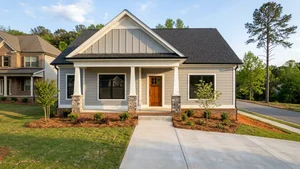
The median sale price for a home on Lake Lanier, GA sits around $394,447, with inventory hovering at 5.3 months of supply. Buyers have more breathing room than in previous years, and that changes how you approach an investment property here.
If you plan to hold a long-term rental or flip a single-family house, the local math has to drive your offer strategy. Finding a property that pencils out means looking past the water views and getting into county regulations, federal shoreline permits, and specific property types.
Key takeaway
Single-family homes are the better starting point for most Lake Lanier investment plans right now because they take a median 92 days to sell, which leaves room to negotiate on price. Underwrite flat values rather than counting on recent gains.
Townhouses are the lower-cost alternative. They draw more bidding and need an HOA rental check before you offer.
Who this guide is for
You are weighing a home on or near Lake Lanier as a rental or long-term hold and deciding which property type and offer strategy make the numbers work.
Is Lake Lanier a good place to invest in real estate?
On Lake Lanier right now, an investor's edge is the purchase price, not appreciation. Single-family homes sat a median 92 days on the market recently, and the all-homes median was flat, down 0.1% year over year, despite a strong single-family gain.
Negotiate hard and underwrite flat values. Townhouses cut the entry price by about $137,000 but offer almost no per-square-foot discount and face more bidding, with 27.9% selling above list based on 26 recent sales.
Flat values mean your return has to come from the purchase price and rent. With 5.3 months of supply across the market, sellers compete for your offer. The single-family price gain sits alongside a flat blended median, so a 7% annual gain is not a safe assumption for your long-term math.
Your choice comes down to negotiating room with single-family properties versus a lower entry price with townhouses, followed by the lake rules that can break either plan. You can check recent housing market trends to see how these figures have shifted over time.
Single-family homes on Lake Lanier as investments
Single-family homes on the lake recently sold for a median of $439,815, up 7.4% year over year. These properties took a median 92 days to sell, meaning a typical listing sits for about three months.
Three months on the market gives you time to inspect the property, verify permits, and negotiate terms. Price gains mean sellers may anchor high, so lean on the days on market when you make your offer. The median price per square foot is $188, confirming this is the mainstream product rather than a premium tier.
If you want the most room to negotiate on price, start with single-family homes. They took a median 92 days to sell and closed below list on average, with 5.4 months of supply.
The downside is that your exit runs on the same clock. If you need to sell, plan on roughly three months of carrying costs, and with 5.4 months of supply, you'll be competing with many other listings. A local selling guide can help you price the exit correctly.
Townhouses on Lake Lanier as investments
Townhouses offer a median sale price of $302,994, based on 26 sales, cutting the entry cost compared to single-family homes. Because the sample size is small, these figures can swing quickly from quarter to quarter.
The savings come from buying fewer square feet, not from a cheaper per-square-foot rate. Townhouses sell for $185 per square foot, nearly identical to the single-family rate, so your rent per square foot has to hold up for the math to work. A much larger share of townhouses sold above list than single-family homes, so plan on less discount and quicker decisions.
If you want the lowest entry price for a long-term rental, start with townhouses that have a confirmed HOA leasing policy. The median was about $137,000 below single-family, but expect more bidding since nearly 28% sold above list.
What you give up is control. HOA rules decide whether a townhouse can be rented at all. Many communities cap leases or ban short-term stays, so ask the HOA for its written leasing policy, rental cap, any rental waitlist, short-term rental rules, and current dues before making an offer.
Lakefront ownership rules on Lake Lanier
The United States Army Corps of Engineers owns most of the land surrounding Lake Lanier in fee title, meaning private ownership generally ends at the federally held boundary. A lakefront buyer usually owns the land up to that government property line, not the water itself.
On Lake Lanier, the dock usually isn't yours. It's a federal permit that has to transfer to you. Permits are issued for a maximum five-year term in limited development areas and become null and void upon sale of the property.
If you want a waterfront property where the dock is part of the value, start with listings that have a verified, transferable Corps dock permit. The dock is a federal permit rather than owned property, so its status determines whether you are paying a waterfront price for waterfront rights. Don't price a listing as dock-front until the permit's status and transfer requirements are confirmed with the Corps' Lanier project management office.
Shoreline permits and lake levels are outside the owner's control, so part of the waterfront premium you pay is exposed to federal rules and weather. Get a survey or plat showing where the private lot ends relative to the government property line, and look up the property's flood zone on the FEMA Flood Map Service Center to get homeowners and flood insurance quotes during your option period. You can read more about living on Lake Lanier and local water hazards to understand the lifestyle and risks.
Short-term and long-term rental rules around Lake Lanier
The lake's 690-plus miles of shoreline touches five Northeast Georgia counties: Dawson, Forsyth, Gwinnett, Hall, and Lumpkin. Rental rules depend entirely on the parcel's jurisdiction, not on the lake itself.
Dawson County requires a short-term rental permit for any home rented for less than 30 days. In Forsyth County, short-term rentals are banned in residentially zoned areas and are only allowed on agricultural or agricultural-residential land with a Conditional Use Permit and a separate license. Confirm the parcel's county and city with the county tax assessor, then ask that jurisdiction's planning office whether a short-term rental permit is required and whether it transfers on sale.
For long-term rentals, HUD Fair Market Rents provide a baseline for what to expect. Hall County and Forsyth County fall into different HUD areas with different rent standards, which impacts your revenue projections. You can compare Forsyth County versus Hall County to see how taxes and local services differ.
One more thing worth knowing: a short-term rental plan that works under county rules can still be barred by an HOA, and permits may not transfer with a sale. Verify the rules at both the county and community level before you commit.
How to run the numbers on a Lake Lanier rental
Running the numbers requires exact inputs: the purchase price, a rent benchmark, property tax without a homestead exemption, insurance including flood coverage, HOA dues, and utilities. Many lake lots rely on well and septic systems, so ask the seller for the records and order inspections if the home isn't on public water and sewer.
Georgia's FY2026 HUD Fair Market Rents for a four-bedroom home are $2,127 in Hall County and $2,605 in Forsyth County; use the figure for the parcel's county as your baseline and add waterfront adjustments carefully. Waterfront homes carry specific maintenance costs that landlocked properties avoid, and skipping any of these steps can leave a landlord underwater.
Offer math on a single-family home
On a $450,000 Lake Lanier listing, the typical single-family gap between list and sale price works out to about $9,450. This assumes the median 97.9% sale-to-list ratio, meaning a typical close lands near $440,550. Half of all sales close closer to the asking price, so treat this as an estimate rather than a guarantee.
If you apply the 1% rule to that price, you'd need about $4,400 a month in rent. For illustration only: HUD's FY2026 Fair Market Rent for a four-bedroom home in Hall County, at roughly half that amount, shows how far typical long-term rent falls short of that benchmark. Most lake purchases rely on appreciation, personal use, or short-term income to close the gap.
Property taxes add another layer. Georgia assesses residential property at 40% of its fair market value, multiplied by the county millage rate. Look up the current millage rate for the parcel on the county tax assessor's site to estimate the property tax without a homestead exemption, as rentals don't qualify for it.
The rent benchmark is a countywide HUD figure that doesn't reflect waterfront premiums. The sale-to-list ratio is a median, so your seller may not negotiate at all. Run the numbers on the actual property before relying on either.
How to decide if a Lake Lanier investment fits your plan
Choosing the right property means answering a few specific questions about your timeline and budget. Do you need the lowest possible purchase price, or the most room to negotiate? Lowest price points to the townhouse section; negotiating room points to the single-family section.
Does your plan depend on short-term rental income? If yes, read the rental rules section first and confirm the parcel's county permit status and any HOA leasing limits before you write an offer. Is a dock or lake access part of what you're paying for? If yes, read the lakefront ownership rules section and verify the dock permit before pricing the property as waterfront.
Could you hold through a slow resale if the plan changes? If not, reread the single-family section and the worked example. If you want comparable sales and permit checks on a specific property, Chris van Olphen's North Georgia Group can pull them for you. Buyers still choosing a location can compare Lake Lanier to Lake Oconee, Lake Hartwell, Lake Allatoona, or Lake Burton.
Lake Lanier housing market at a glance
Here is how the numbers break down for the 90 days ending September 30, 2026. The townhouse figures rest on just 26 sales, which means these specific metrics can swing quarter to quarter. You can check the best neighborhoods and communities for inventory breakdowns.
All homes: median sale price $394,447, down 0.1% year over year (90 days ending Sept. 30, 2026)
All homes: 153 sales, 266 active listings, 5.3 months of supply (90 days ending Sept. 30, 2026)
All homes: median 89 days on market, 97.8% sale-to-list, 12.6% sold above list, $188 per square foot (90 days ending Sept. 30, 2026)
Single-family: median sale price $439,815, up 7.4% year over year, 120 sales (90 days ending Sept. 30, 2026)
Single-family: median 92 days on market, 97.9% sale-to-list, 10.2% sold above list, same price per square foot as the all-homes figure (90 days ending Sept. 30, 2026)
Single-family: 212 active listings, 5.4 months of supply (90 days ending Sept. 30, 2026)
Townhouse (based on 26 sales): median sale price $302,994, down 0.7% year over year, median 88 days on market (90 days ending Sept. 30, 2026)
Townhouse (based on 26 sales): 98.6% sale-to-list, 27.9% sold above list, $185 per square foot, 33 active listings, 3.9 months of supply (90 days ending Sept. 30, 2026)
Lake Lanier real estate investing FAQs
What county is Lake Lanier in?
Lake Sidney Lanier's 690-plus miles of shoreline touches five Northeast Georgia counties: Dawson, Forsyth, Gwinnett, Hall, and Lumpkin. Rental permits and property tax rates follow the parcel's specific county, so confirm the location with the county tax assessor. You can review a comparison of Forsyth versus Hall County to see how local rules differ.
How low does Lake Lanier get?
The lake's full summer pool elevation is 1,071 feet above mean sea level, dropping to 1,070 feet in winter. The record low occurred during the 2007 drought, when the lake fell to an elevation of 1050.79 feet in December 2007, approximately 20 feet below its full pool level. Low water can leave docks unusable on shallow coves, so ask the seller how the dock sat during recent low-water periods.
Is Lake Lanier open to the public?
Yes. The lake is a federal project managed by the U.S. Army Corps of Engineers, which operates 40 park areas around the lake for camping and day-use activities, including 33 day-use parks. For an investor, this means renters can reach the water from many non-waterfront homes, widening the rental pool beyond expensive lakefront lots.
What is the 2% rule for an investment property?
The 2% rule suggests a property should generate monthly rent equal to at least that percentage of the purchase price. For illustration only: a $300,000 purchase would need $6,000 a month in rent, which is far above the FY2026 Fair Market Rent for a four-bedroom home in either Hall or Forsyth County. Few Lake Lanier properties meet this threshold, making the rule a preliminary screen rather than a final verdict.
What is the 70% rule in flipping houses?
The 70% rule states that an investor should pay no more than that percentage of a property's after-repair value minus repair costs. For illustration only: on a home with a $400,000 after-repair value and $40,000 in repairs, the maximum offer would be $240,000. Slow resale times on Lake Lanier add holding costs that this rule doesn't account for.
Can you get a homestead exemption on a Lake Lanier rental property?
No. Georgia's homestead exemption applies only to homeowners who own and occupy the property as their legal primary residence as of January 1 of the tax year. A rental property is taxed on its full assessed value, which Georgia sets at 40% of fair market value. Check the parcel's millage rate on the county tax assessor's site to calculate the exact burden.